Biography
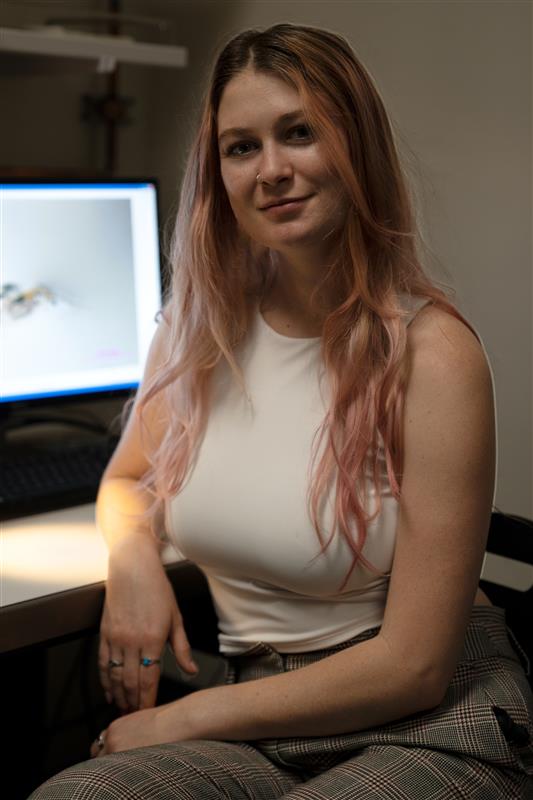
Shannon Snyder is a graduate student in the Cresko Laboratory focusing on the evolution of transgenerational phenotypic plasticity. Using the invasive water flea Daphnia lumholtzi as a model system, Shannon investigates how organisms respond to environmental threats across multiple generations and the molecular mechanisms underlying these remarkable adaptations.
Education
- Ph.D. Candidate, Biology, University of Oregon (in progress)
- M.S., Arizona State University
- B.S., Arizona State University
Research Interests
My dissertation work focuses on uncovering the molecular mechanisms governing within and between generational phenotypic plasticity. By capitalizing on the invasive water flea, Daphnia lumholtzi’s, dramatic morphological response to predation, I am working to disentangle the molecular and epigenetic mechanisms underlying this plastic response and its persistence over generational time.
Current Research
Transgenerational Plasticity in Daphnia
- Investigating predator-induced morphological defenses
- Tracking phenotypic changes across generations
- Identifying epigenetic inheritance mechanisms
Molecular Mechanisms
- Gene expression analysis during defense induction
- Epigenetic modifications and inheritance
- Hormonal signaling pathways
- Environmental sensing mechanisms
Evolutionary Implications
- Adaptive value of transgenerational plasticity
- Costs and benefits of phenotypic flexibility
- Invasion biology and plasticity
- Climate change and adaptive responses
Research Approach
Experimental Methods
- Multi-generational exposure experiments
- Predator cue manipulations
- Morphological measurements
- Behavioral assays
Molecular Techniques
- RNA sequencing
- Epigenetic profiling
- CRISPR/Cas9 genome editing
- Hormone quantification
Computational Analyses
- Transcriptomic analysis
- Epigenetic data processing
- Statistical modeling
- Evolutionary simulations
Skills
- Organismal Biology: Daphnia culture and maintenance
- Molecular Biology: Gene expression analysis, epigenetics
- Microscopy: Imaging and morphological analysis
- Data Analysis: R, Python, bioinformatics
- Experimental Design: Multi-generational studies
Professional Activities
- Conference presentations
- Peer review service
- Graduate student mentoring
- Science outreach
Teaching Experience
- Graduate Teaching Fellow
- Mentoring undergraduate researchers
- Workshop instruction
Future Directions
My research aims to:
- Understand the molecular basis of adaptive plasticity
- Predict evolutionary responses to environmental change
- Apply findings to conservation and management
- Bridge ecology, evolution, and molecular biology